

By Peter Theuri,
For a country whose rice consumption has increased tenfold in just over a decade, Ethiopia’s perennial rice trials are a ‘timely and necessary intervention’, says Dr Getachew Melaku, especially due to the crop’s ability to regrow for several cycles without reseeding, and with a regeneration potential of 100 percent.
Dr Getachew sees perennial rice as an opportunity to advance Ethiopia’s aspirations for food sovereignty and food security, while positioning the country as a hub for the development and improvement of perennial rice technology.
Rice, especially, has gained importance among locals because it has found a way to blend with local dishes; it is now mixed with teff, an ancient, gluten-free grain native to Ethiopia, to form injera, a sour flatbread which is popular in the country and which, conveniently, can act as both plate and food.
Looking at the speed with which researchers in the country, buoyed by partnerships forged among key research institutes such as Ethiopia’s Bio and Emerging Technology Institute (BETin), Gambella University, Yunnan University, and Saudi Star Agricultural Development PLC, are developing and testing these perennial varieties, the future Dr Getachew dreams about is within touch for his country.
Dr Getachew works as a researcher at BETin in Addis Ababa, where he currently leads the perennial rice adoption and performance evaluation project. Throughout his academic research, he was actively involved in the study of genetic diversity of African wild rice, and also worked on molecular and morphological characterization of perennial rice varieties.
In 2016, he was involved in the development of the first perennial rice variety, PR23.
These perennial rice varieties offer significant advantages over conventional local varieties and provide great potential for Ethiopia and for the region.
“This rice, which was developed through interspecific crossing between Asian cultivated rice and African wild rice, can regrow after harvest for four to eight years without needing to be replanted each season. To the farmer, this has quite a number of advantages,” he says.
Firstly, perennial rice yields 18 to 36 percent more than conventional rice and matures in exactly four months for the first cycle, which is about three weeks faster than the local rice variety. It also reduces labour requirements by more than 58 percent because farmers do not need to till and replant the crop after every harvest.
“And this saves farmers time that could be put into good use in other economic activities,” he says.
The reduction in production costs, particularly from eliminating recurring expenditure on seed, could also reduce financial pressure on farmers, especially smallholders.
“It also provides stable productivity, with studies showing little variability in expected (versus actual) production. That way, farmers are able to plan accordingly, especially financially,” Dr Getachew says.
Perennial rice also has a robust root network that prevents loss of soil fertility through excessive erosion, he says. It also allows necessary fungi and nitrogen fixing bacteria to thrive, thus improving the soil quality, and leads to reduced need to use fertilizers.
He says that the commercialization of perennial rice in Ethiopia will lower establishment costs, and lead to a potential import substitution in Ethiopia, saving on crucial foreign exchange reserves.
National performance trials are ongoing in earnest for a crop which was not always among Ethiopia’s staples, but which has come to the fore following rapid population increase, climate change and risk of food insecurity amid high rates of rural to urban migrations in the country.
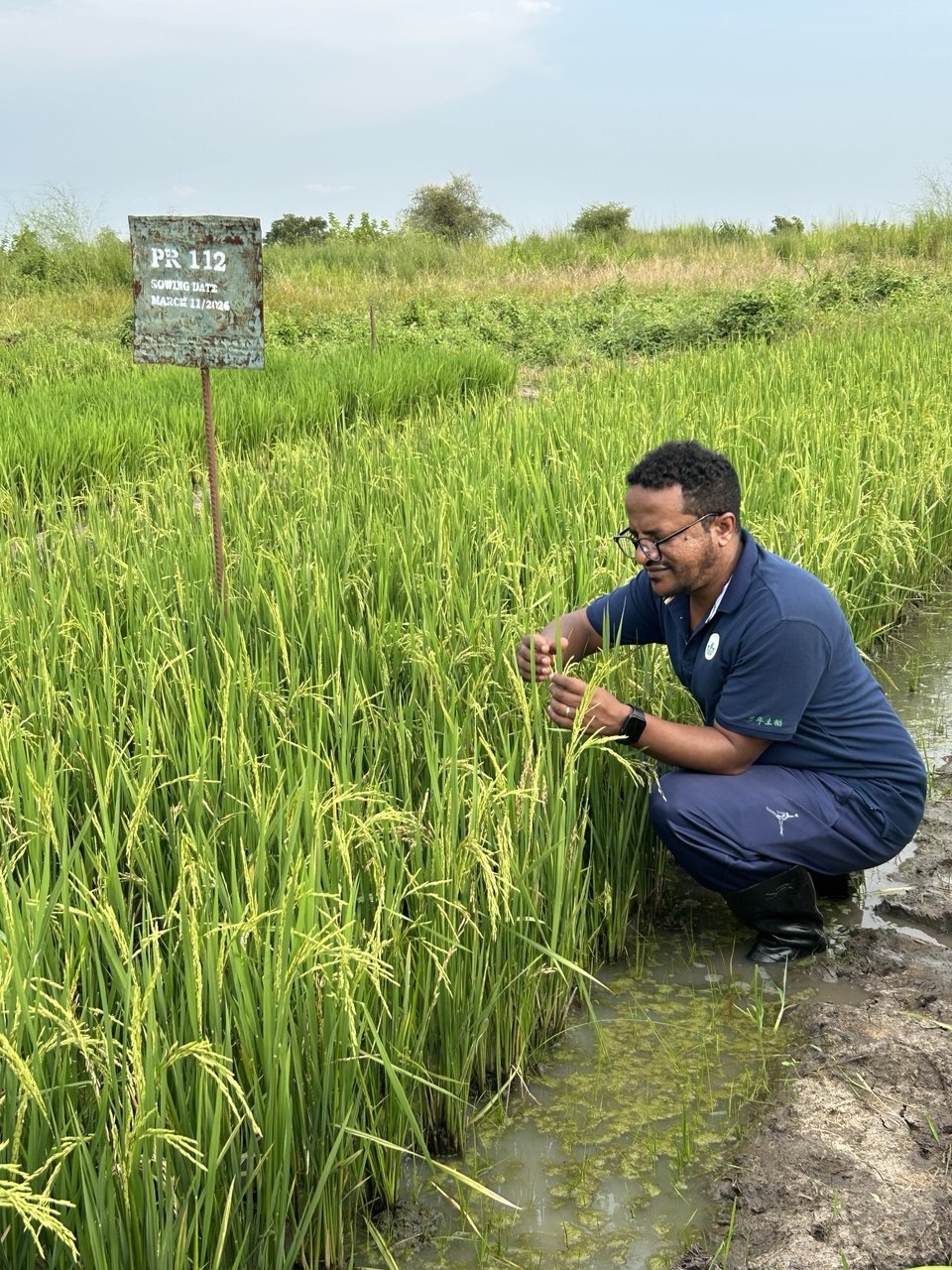
There have been six improved varieties planted at Saudi Star Agricultural Research PLC in Ethiopia. The first two Japonica types showed an 18 percent yield increase, while the other four varieties showed yield increases ranging from 27 percent to 36 percent compared to the local annual check variety. The project is now in its second flowering cycle in Gambella, a regional state in western Ethiopia, with harvest for the first cycle completed on July 5. Data collection is ongoing for publication purposes.
The local rice varieties, he says, continue to struggle to withstand a plethora of challenges, including high cost of production fueled by incessant labour demand, lack of quality seed to enhance productivity, loss of soil fertility and water holding capacity, high energy and water demands, thus, weed pressure, and the inevitable climate variability.
Dr Getachew hopes that Ethiopia plans to establish training centers across different locations to support farmers in managing perennial rice varieties, including aspects like fertilizer use, pest and disease management, and sustainable value chain systems.