The Republic of Benin is stepping up efforts to advance genome editing research and development, with national stakeholders calling for increased investment in scientific research, institutional capacity and the establishment of an enabling regulatory environment. These efforts seek to harness modern biotechnology to address agricultural productivity and food security challenges in the country.
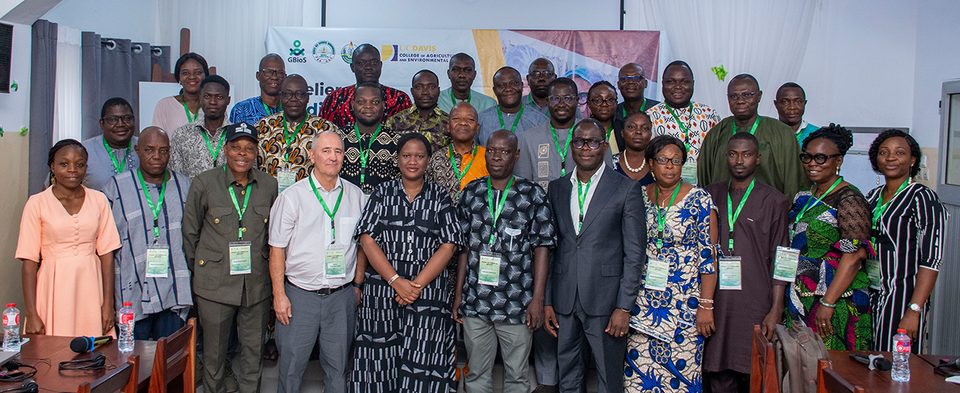
The inaugural National Workshop on Gene Editing, held at the University of Abomey-Calavi (UAC) from 10th-12th November 2026, underscored the importance of government support in advancing the technology. Themed ‘Gene Editing: Science, Regulations and Policy in Benin’, the workshop sought to develop a coordinated national roadmap for the development and responsible application of genome editing. ISAAA AfriCenter participated in the workshop and facilitated a session on effective science communication.
Participants explored opportunities presented by genome editing in developing improved crop varieties with desirable agronomic traits, including those that could enhance agricultural productivity and resilience to environmental stresses. Researchers from the Genetics, Biotechnology and Seed Science Unit (GBioS) shared progress in their maize and fonio breeding programs, highlighting opportunities to integrate genome editing into existing crop improvement initiatives.
The workshop also examined barriers to genome editing research in Benin, including inadequate research infrastructure, human resource needs and access to technology. Participants recommended establishing sustainable funding mechanisms to support crop variety development and seed dissemination, alongside strengthening public-private partnerships to accelerate agricultural innovation.
Regulatory and policy considerations featured prominently in the deliberations. Dr. Félicien Amakpe, Benin’s National Focal Point for the Cartagena Protocol on Biosafety, joined experts from national and international institutions in exploring appropriate regulatory pathways, intellectual property considerations and seed certification requirements. Discussions underscored the importance of establishing a regulatory environment that facilitates innovation without compromising biosafety.
The workshop further highlighted the centrality of effective science communication in advancing genome editing. Participants examined strategies for enhancing public understanding of the technology, strengthening institutional communication and fostering informed dialogue among stakeholders. Effective communication was identified as an integral component of creating an enabling environment for responsible biotechnology development.
Benin enacted its Biosafety Law in 2021. Its implementation is overseen by the National Biosafety Council (Conseil National de Biosécurité – CNB), the national authority mandated to regulate activities involving living modified organisms and coordinate biosafety-related matters. The existing legislation provides an institutional foundation upon which the country can build appropriate regulatory mechanisms for emerging biotechnologies, including genome editing.
Organized by GBioS under UAC’s Faculty of Agricultural Sciences, the workshop brought together researchers, policymakers, regulators and international development partners, including representatives from ISAAA AfriCenter, AUDA-NEPAD and research institutions across Africa and beyond. It culminated in the formulation of a proposed action plan outlining scientific, regulatory and institutional priorities to advance genome editing in Benin and position the technology as a contributor to sustainable agricultural development.