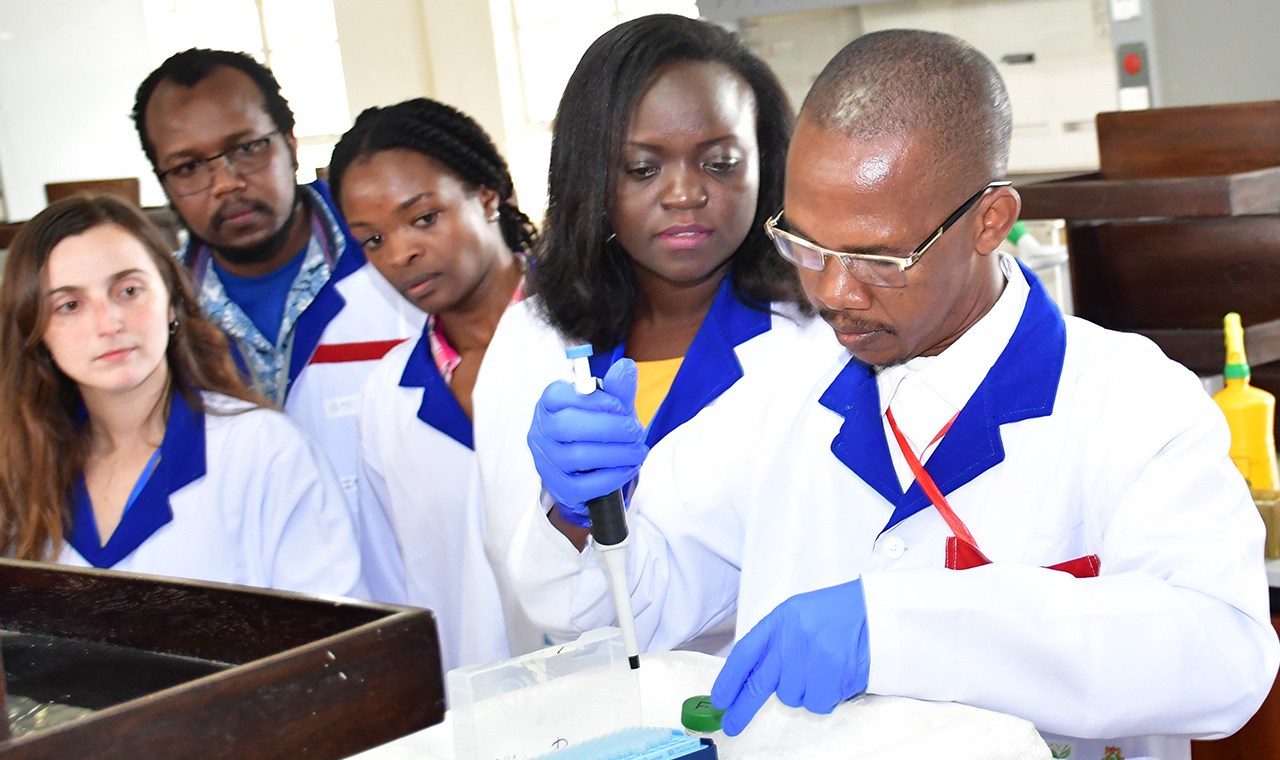
Research scientists in the laboratory using modern technology to develop enzymes for research work during enzyme manufacturing masterclass in Nairobi spearheaded by Kenyatta University and ISAAA AfriCenter
African biotechnology researchers have been urged to integrate regulatory considerations earlier in their project design, amid concerns that many initiatives fail to secure approval and commercialisation due to regulatory technicalities.
The call was made during a recent webinar aimed at strengthening researchers’ policy and regulatory understanding in biotechnology, while also supporting applicants to the International Centre for Genetic Engineering and Biotechnology (ICGEB) BiotechNet Collaborative Research Programme (CRP) Grants. The webinar emphasised the need for proposals to adequately incorporate regulatory requirements from the outset.
Speakers demonstrated how most biotechnology research proposals and ongoing projects fail to sufficiently account for regulatory obligations and associated compliance costs.
“This often creates a gap that results in proposals failing to account for the cost and requirements of regulatory compliance, yet these are essential in moving innovation from lab to market,” said Margaret Karembu, Director, ISAAA Africenter.
ICGEB BiotechNet Project Manager Claire Pauletto encouraged applicants to emphasise translational impact and clearly outline regulatory considerations, noting that these are key selection criteria for CRP Grants.
“It is very important that your proposal clearly demonstrates both regulatory considerations and the translational impact of your research,” she said.
ISAAA Africenter Senior Programme Officer Paul Chege challenged researchers to address regulatory triggers such as ethics, biosafety, biosecurity, environmental safeguards, access and benefit sharing, and intellectual property protection throughout the research-to-commercialisation pathway.
He warned that failure to anticipate these requirements often leads to project failures at critical transition points, underscoring the importance of public engagement and adequate financing.
“In BiotechNet countries such as Kenya, Ethiopia and Uganda, biosafety frameworks are guided by national laws and international commitments such as the Cartagena Protocol on Biosafety, supported by relevant regulatory institutions,” Dr Chege explained.
“Regulatory frameworks are essential for fostering responsible innovation, building public trust, and ensuring the successful translation of biotechnology research into sustainable socio-economic benefits,” he added.
The ICGEB BiotechNet CRP Grants programme supports research in basic science, human healthcare, industrial and agricultural biotechnology, and bioenergy, targeting both early-career and experienced African researchers.
The current application window closes on April 30, 2026. Submissions will then undergo national, internal and international review processes, with final selections expected in October 2026. Applicants will be notified by late November or early December 2026, and successful candidates will receive support from ICGEB and its partners throughout project implementation.