By Dr Paul Chege,
Senior Program Officer, ISAAA AfriCenter
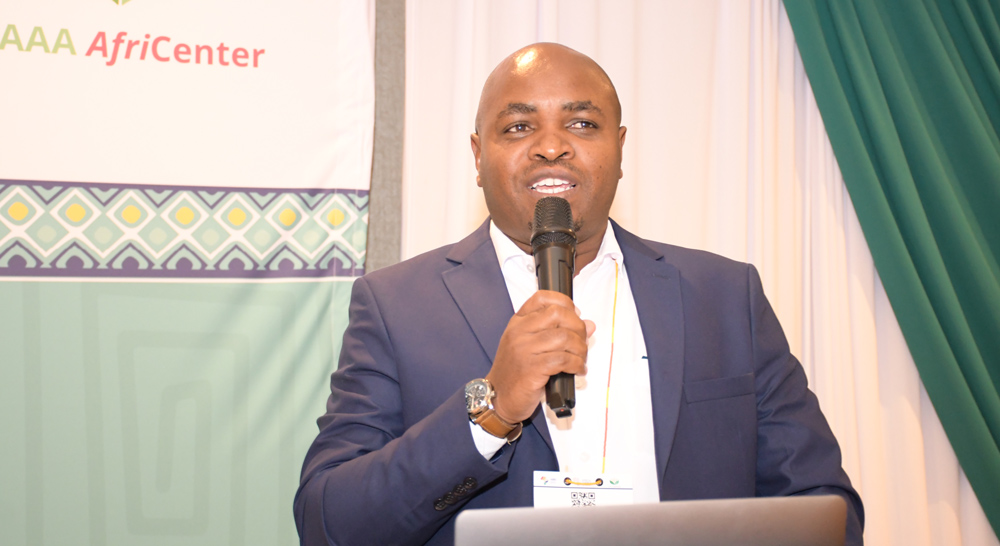
Kenya has given herself a roadmap to transform how it finances, governs, and leverages research for national development. In a context where ambition has often outpaced coordination and where innovation potential has not always been matched by predictable investment, the adoption of the Research Financing and Capacity Strengthening Masterplan marks a decisive institutional shift. It signals not only policy clarity, but confidence- confidence that research and innovation can be structured, financed, and governed as strategic drivers of economic transformation.
The development and eventual adoption of the Research Financing and Capacity Strengthening Masterplan represents a defining milestone in Kenya’s science, technology, and innovation reform journey. More than a technical document, the Masterplan emerged as a systems reform instrument- anchored in evidence, sustained institutional dialogue, and progressive government ownership. Its success lies not merely in the quality of its analytical outputs, but in the integrity of its process: a deliberate, inclusive, and strategically sequenced partnership between government agencies, technical experts, and development partners. The catalytic support of the Foreign, Commonwealth & Development Office (FCDO) UKAid, through the Research and Innovation Systems for Africa (RISA) Fund, created the enabling conditions for this reform process to unfold with depth, reflection, and national ownership.
From the outset, the initiative was framed not as a stand-alone project, but as a reform journey aimed at addressing structural constraints within Kenya’s research and development ecosystem. A comprehensive diagnostic phase laid the foundation. Rather than beginning with predefined solutions, the process invested in a rigorous review of financing trends, institutional mandates, governance arrangements, infrastructure gaps, and human capital challenges. This evidence-based approach surfaced systemic weaknesses: fragmented funding flows, unpredictable financing mechanisms, under-resourced research infrastructure, limited absorptive capacity, and weak research-to-industry linkages. Through the articulation of these constraints with clarity, the reform effort gained credibility and avoided the pitfalls of incremental or piecemeal recommendations.
Equally important was the architecture of collaboration. Government agencies were not positioned as passive reviewers of externally drafted proposals; they were co-designers and co-authors of the reform agenda. Multi-agency task teams, structured stakeholder consultations, and iterative validation sessions ensured that the Masterplan reflected institutional realities and collective ambition. The Technical Advisory Committee (TAC) provided strategic guidance throughout, while the TAC Retreat served as a pivotal inflection point. In that structured reflective space, technical deliberations matured into strategic alignment. The five interlocking pillars of the Masterplan- sustainable research financing; research infrastructure and digital systems; human capital and institutional capacity; industry linkages and societal impact; and policy, legal, and regulatory frameworks-were sharpened and integrated into a coherent reform logic.
A defining attribute of the process was the progressive and strategic engagement of the Office of the Principal Secretary, State Department for Research, Science and Innovation. Under the leadership of Prof. Shaukat Abdulrazak, the reform agenda was consistently aligned with broader fiscal responsibility, governance coherence, and national competitiveness. Adoption at that level was not treated as a final endorsement to be secured at the end of drafting; rather, leadership engagement was cultivated throughout. Regular briefings and iterative feedback ensured that the Masterplan evolved in tandem with institutional priorities. The reform was framed as a governance and financing instrument – not merely a research strategy – positioning it within the broader economic and accountability architecture of government.
The Theory of Change, a framework that explains how and why a specific, long-term goal will be reached through an initiative, served as a unifying governance compass. It articulated how predictable and diversified financing, strengthened institutional capacity, modernized infrastructure, enhanced industry linkages, and improved regulatory coherence would collectively produce a more competitive and self-sustaining research ecosystem. It made assumptions explicit and pathways measurable, strengthening alignment across agencies and enhancing communication with fiscal and planning authorities. In this way, the Theory of Change was not a compliance artifact, but a strategic tool for coherence and accountability.
The contribution of FCDO UKAid through the RISA Fund was catalytic in both design and execution. The flexibility embedded in the funding model enabled extended consultations, reflective retreats, and iterative refinement- elements often constrained in rigid, output-driven projects. The systems orientation of RISA aligned seamlessly with the Masterplan’s ambition to strengthen institutions rather than deliver isolated activities. The government-centered process ensured that the partnership reinforced legitimacy and ownership, seeing to the transition of the Masterplan from a funded initiative to an embedded reform instrument within the stewardship of the Office of the PS.
Navigating institutional complexity required careful facilitation and transparency. Discussions around financing reform, performance-based allocations, and accountability mechanisms inevitably intersected with mandates and resource distribution. The process addressed these sensitivities by emphasizing ecosystem strengthening over institutional competition. Through structured dialogue, clear documentation, and iterative validation, trust was built across agencies. That trust proved essential in reducing resistance and fostering a shared understanding that sustainable progress depends on coordination and collective responsibility.
The adoption of the Research Financing and Capacity Strengthening Masterplan under the stewardship of Prof. Shaukat Abdulrazak therefore signifies more than policy endorsement. It reflects institutional internalization and a shared recognition that research and innovation must be financed and governed with the same rigor applied to other strategic sectors of the economy. Kenya has moved from fragmented ambition to structured reform—from aspiration to architecture.
For future projects, the lessons are clear. Sustainable transformation in complex public systems requires credible diagnostics, co-creation from inception, strategic leadership engagement, structured reflective spaces, and flexible, trust-based development partnerships. Reform is not achieved through documentation alone; it is cultivated through alignment, ownership, and deliberate institutional evolution.
Through the catalytic support of FCDO UKAid under the RISA Fund, and through the stewardship of the State Department for Research, Science and Innovation under Prof. Shaukat Abdulrazak, Kenya has demonstrated that systemic reform is possible when vision, evidence, and partnership converge. The Masterplan stands not merely as a document, but as a roadmap- one that positions research and innovation at the center of the country’s long-term economic transformation.