By Dr Joyce Ngure,
Directorate of Science, Research and Innovation.
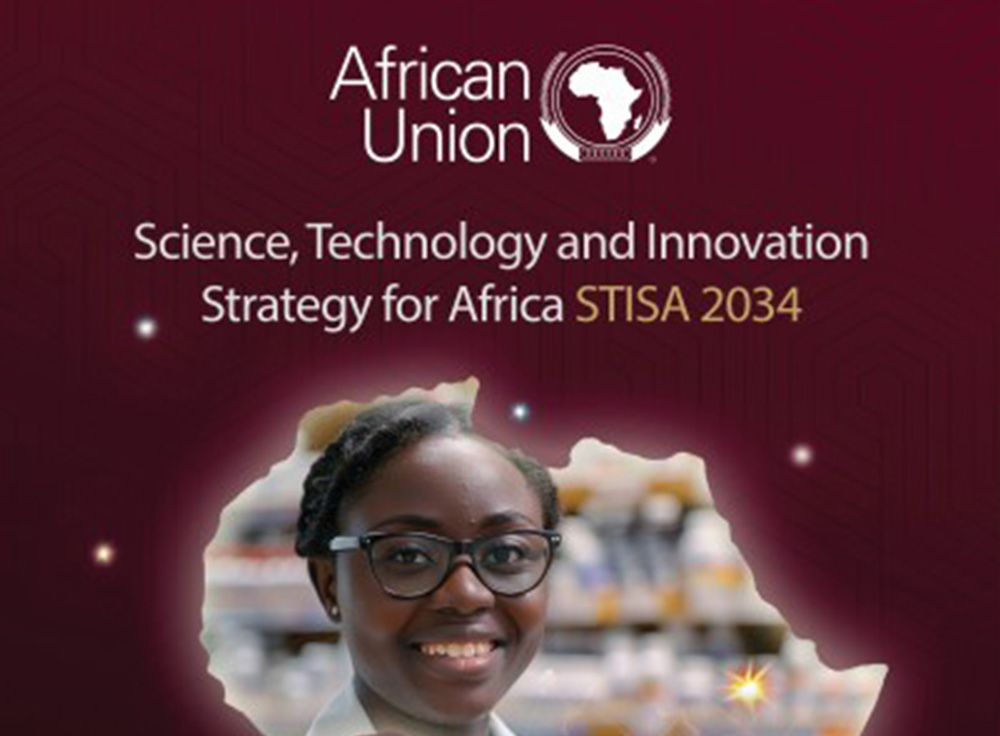
After the lapse of The Science, Technology and Innovation Strategy for Africa (STISA 24), experts, governments, institutions and African stakeholders consultatively developed STISA 34 as a means to its predecessor’s continuation and review. STISA 34 was developed to tackle emerging global and regional challenges as well as address gaps in STISA 24. It gave more cognizance on the use of Science, Technology and Innovation (STI) for national development.
STISA 34’s assumptions were that Africa would, within its period of execution, experience continental political and economic stability, without pandemics, sufficient funding, and commitment by stakeholders. To circumnavigate around these assumptions, which are inevitable challenges, STISA 34 adopts programs with collaboration among member states so that there is continuity in case some countries face instability. STISA-2024’s lessons showed implementation fragmentation as a gap and to resolve this, STISA-2034 embraced the development of regional centers of excellence, shared research infrastructure and joint initiative projects to bridge the political and economic struggles of any country as results are to be based on the collective output.
To overcome the funding challenge of single government exchequer funding reliance, the adoption of diversified and blended funding models such as: Public private partnerships (PPPs), engagement with development partners, diaspora funding and the use of venture capital and impact funds to support innovations are strategized. STISA 34 also supports increased engagement of private sector through market driven innovation, such as industry led innovation, development of startup ecosystems and the strengthening of industry-academia collaboration. The strategy clearly illustrates governance structures at the AU and regional levels as well as monitoring and evaluation frameworks that delineate roles for governments, academia, and industry. To ensure success, STISA 34 is politically aligned to other frameworks such as the AU Agenda 2063 for buy in by member states.
For equal development in the priority areas of health, agriculture, ICT, energy and environment in spite of the different interests and actors, development is through a cross-sector linking approach, such as linking food security to agriculture, climate and ICT. The areas are also coordinated under the aligned Agenda 2063 framework with incentives on integrated funding and partnerships that reward multi-sector collaboration rather than isolated efforts.
These, coupled with a shared monitoring and evaluation system to track progress across all stakeholders in governments, private sector and academia create a harmonious, synergistic and balanced approach in the STI ecosystem.
STISA 24 achieved alignment to STI with Agenda 2063 and mainstreamed it into development policy through establishing and strengthening research and innovation institutions, regional centers of excellence and networks. It promoted solving local problems in priority research areas as well as strengthened partnerships between governments, universities, private sector, and international collaborators, which improved STI policy awareness and coordination in Africa.
Conversely, STISA-2034 seeks to build on the achievements of STISA-2024 that established systems, by targeting measurable socio-economic impacts. It moves from a silo sector approach to integrated, strategies that strengthen governance, coordination, and accountability mechanisms. It includes private sector to work with governments and academia in the innovation ecosystems and adopts lessons from COVID-19 preparedness in the event of a crisis and uncertainty.
Africa’s’ population is largely youthful, with 70% of the continent under 30 years, and thus STISA 34 seeks to invest in STEM education, digital skills, and innovation ecosystems that equip youth with research and innovation skills, entrepreneurship, startups, and strengthening academia and industry linkages. The strategy empowers youth to drive industrialization, job creation, and sustainable development for economic growth.
Infrastructure and industrialization in Africa have historically been hampered by weak STI policies, underfunding, governance challenges, and a lack of awareness of STI as a transformative agent to socioeconomic development. STISA 34 proposes the strengthening of innovation capacity, regional integration, private sector involvement, and skills development in alignment with the AU Agenda 2063. The success of the strategy will be largely dependent on the positive acceptance, adoption and implementation by most, if not all, member states.