By Peter Theuri
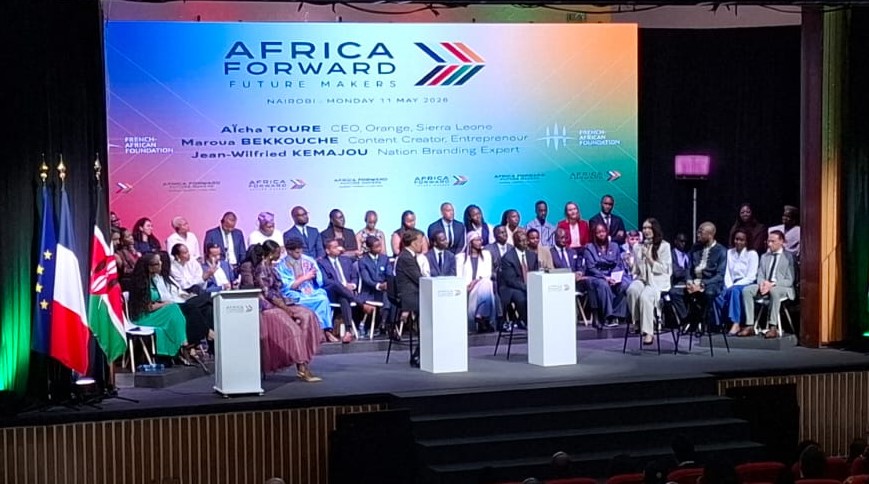
Over 4,000 delegates, including 30 heads of state, gathered in Nairobi, Kenya, for the Africa Forward Summit on May 11 – 12. Among key issues discussed was responsible utilization of the continent’s natural resources, with the Summit culminating in commitments to prioritize investment on climate resilience and environmental conservation.
While a good deal of discussion was focused on Africa’s youth potential amid rapid technological advancement (in 2050, one in every four young people across the globe will be African), leaders deliberated on how to secure the continent’s sprawling resources and ensure exploitation of the same is, foremost, of benefit to Africans.
At the end of the Summit, representatives of African nations and the French Republic came up with a declaration which, inter alia, promised to, as a means towards powering growth through green industrialization and energy transition, invest in agricultural research, innovation and climate-smart practices including agroecology, agroforestry, locally adapted quality seeds, integrated soil health management, and digital tools while fostering joint research and development partnerships with French institutions.
Among the discussions was an appreciation of Africa’s constantly suffering from devastating effects of climate change, worse than other continents, while contributing the least amount of pollution.
Kenya’s President William Ruto demanded a relook into the global financing formula, saying that the credit rating system that was existent was punitive to Africa and the rest of the Global South whenever they approached multilateral lenders, and made it difficult for the continent to rack up enough resources for climate mitigation. He, however, said that Africa must now learn to take charge of its own affairs.
“We ask for a revision of these global funding models, which disadvantage Africa and discourage long-term investment in productive sectors. But before we go looking for money from other people, we have agreed with the Africa Development Bank, African Export-Import Bank and the Africa Finance Corporation that we must structure our own Development Finance Institutions to unlock four-trillion dollars of our own resources to finance our development.”
United Nations Secretary General Antonio Guterres agreed.
“Africa must advance a bold resolve towards harnessing private capital and exploring multilateralism for its own good. Out of climate change, for example, the continent suffers the harshest consequences, and yet it has been denied resources to mitigate this.”
The Summit also discussed rising sea levels, with the declaration urging long-term national strategies grounded in science and nature-based solutions.
“We welcome the Blue Nationally Determined Contributions (NDC) Challenge, and call for mobilization enabling coastal communities to lead responses to the climate crisis,” it read, seeking inclusion of local people.
Nationally Determined Contributions (NDCs) are country-specific climate action plans under the Paris Agreement designed to cut greenhouse gas emissions and adapt to climate impacts.
Leaders also sought to align investments with climate and development priorities on scalable, bankable and impactful projects to deliver tangible results and long-term impact.
The deliberations, which were expected to reinforce agreements from the Africa Climate Summit of 2023, also held in Nairobi, sought to ensure climate-vulnerable countries in Africa, which are already in debt, are not penalized, and can forge sustainable development without the burden of lack of resources.
Monetary commitments in excess of $27 billion were promised. France, from its public and private coffers, will be giving the continent up to $16.4 billion for different sectors. Over half of all investments, amounting to around $16 billion, will go to the energy sector as Africa pursues self-sufficiency and greater use of green energy sources. The continent holds 60% of the world’s best solar resources due to its geographical position, with some regions receiving over 4,000 hours of sunlight annually.
TotalEnergies announced $2 billion for renewable power in Rwanda and $400 million for clean cooking initiatives in Kenya, Uganda and Tanzania by 2030. Meridiam, an infrastructure investor, will double the capacity of Kenya’s Kipeto wind project for $200 million, and Global Telecom Holding will build a 250-megawatt solar farm in Zambia for $350 million. AXIAN Group ($280 million to co-develop digital and energy infrastructure) and Schneider Electric ($20 million for African clean-tech startups) were also part of those who made pledges towards green, clean energy in the near future.
The leaders also discussed agriculture, human capital, finance, AI, industrialization and the blue economy in earnest.
Safeguarding marine biodiversity, managing vital blue carbon ecosystems, and understanding competing maritime interests came to the fore as the need to regulate fishing, to reinvigorate key wetlands and to empower communities around them was also discussed.